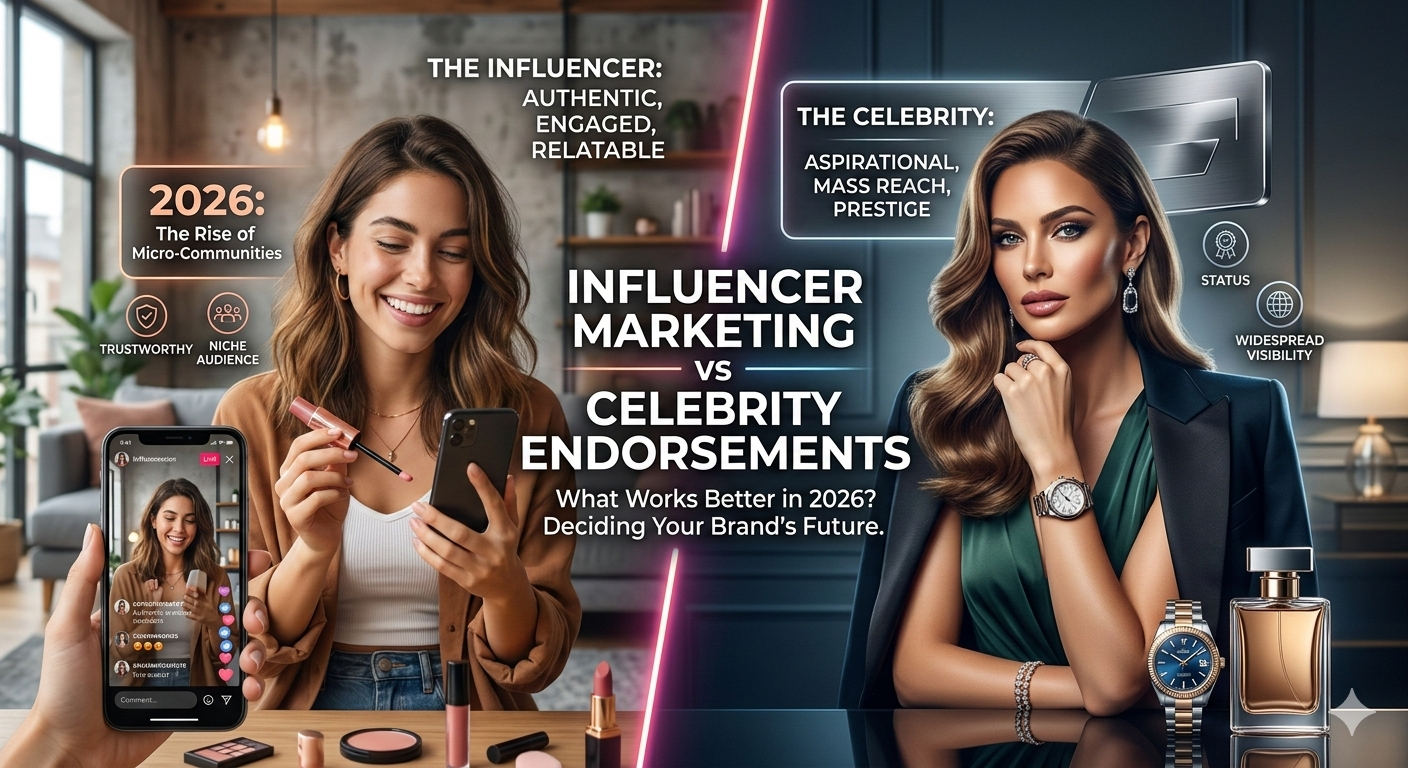

In 2026, brands are no longer chasing only reach — they are chasing real connections. Influencer marketing has grown rapidly because audiences trust relatable creators who share honest experiences. From micro-influencers to niche content experts, brands can now target specific communities and drive higher engagement with authentic storytelling.
On the other hand, celebrity endorsements still offer massive visibility and instant credibility. A well-known celebrity can create buzz overnight and position a brand as premium or aspirational. However, these campaigns often require larger budgets and may not always guarantee strong audience interaction.
So, what works better in 2026? The answer depends on your goals. If you want engagement and conversions, influencer marketing often wins. If you want broad awareness and brand prestige, celebrity endorsements can still be powerful. The smartest brands combine both strategically.
What Is Influencer Marketing?
Influencer marketing is a digital strategy where brands collaborate with content creators to promote their products or services to a loyal audience. Instead of traditional ads, it feels more personal and authentic. Influencers share real experiences, reviews, and recommendations, helping brands build trust, increase engagement, and drive sales through meaningful online connections in 2026.
-
Builds trust through relatable content
-
Targets niche audiences
-
Higher engagement rates
-
Cost-effective for startups
-
Performance-driven and measurable
What Are Celebrity Endorsements?
Celebrity endorsements are marketing campaigns where well-known public figures promote a brand, product, or service. Their popularity and public image help create instant attention and credibility. When a trusted celebrity supports a brand, it can influence fans’ buying decisions, boost brand awareness, and position the product as premium, aspirational, and widely recognized.
-
Builds instant brand recognition through a famous face
-
Creates strong credibility and public trust
-
Increases brand visibility across mass audiences
-
Positions the product as premium or aspirational
-
Generates media attention and social buzz
-
Influences fan purchasing decisions through star power
Influencer Marketing vs Celebrity Endorsements: Quick Comparison
Influencer marketing focuses on authenticity, niche targeting, and strong audience engagement, making it ideal for brands seeking conversions and trust. Celebrity endorsements, however, deliver massive reach and instant brand recognition. In 2026, the choice depends on your goal — deeper connections and ROI, or large-scale awareness and premium positioning.
| Factor | Influencer Marketing | Celebrity Endorsements |
|---|---|---|
| Audience Reach | Niche and targeted communities | Massive, broad audience reach |
| Trust Level | High authenticity and personal connection | Strong credibility due to fame |
| Cost | Affordable (micro & nano influencers available) | Expensive and high-budget campaigns |
| Engagement Rate | Usually, higher engagement and interaction | Lower engagement compared to influencers |
| Brand Positioning | Relatable and community-driven | Premium and aspirational image |
| Best For | Conversions, startups, digital brands | Brand awareness and large-scale visibility |
| ROI Tracking | Easy to track via digital metrics | Harder to directly measure impact |
| Long-Term Impact | Builds loyal customer relationships | Creates instant but sometimes short-term buzz |
Cost Breakdown in 2026
In 2026, marketing costs vary greatly between influencers and celebrities. Micro and nano influencers are budget-friendly, making them perfect for startups and growing brands. Celebrity endorsements, however, require a significant investment, including appearance fees and production costs. While influencers offer flexible pricing and better ROI tracking, celebrities deliver large-scale exposure at a premium price.
| Category | Influencer Marketing (2026) | Celebrity Endorsements (2026) |
|---|---|---|
| Micro Influencer (10K–100K followers) | ₹10,000 – ₹1,00,000 per post | Not applicable |
| Macro Influencer (100K–1M followers) | ₹1,00,000 – ₹5,00,000 per post | Not applicable |
| Campaign Flexibility | Flexible packages & negotiable pricing | Fixed high contract fees |
| Celebrity Fee | Not applicable | ₹20 Lakhs – ₹5 Crore+ per campaign |
| Production Costs | Moderate (content-style shoots) | High (professional ads, media buying) |
| ROI Measurement | Easy via analytics & tracking links | Harder to directly track conversions |
| Best for Budget Brands | Yes | No (high investment required) |
Engagement & Conversion: What Truly Drives Sales?
In 2026, engagement is the real driver of conversions. Likes, comments, shares, and meaningful interactions show that audiences truly connect with a brand. Influencer campaigns often create deeper trust, which leads to higher sales. While celebrity ads build awareness, authentic engagement builds buying intent. Strong relationships — not just reach — are what truly drive consistent revenue growth.
Influencers:
-
Share real experiences
-
Respond to comments
-
Create storytelling content
-
Build community
Celebrities:
-
Create strong awareness
-
Deliver aspirational branding
-
Generate media buzz
Pros and Cons of Influencer Marketing
Influencer marketing builds trust, drives strong engagement, and targets niche audiences effectively. It is cost-flexible and delivers measurable ROI. However, results depend on choosing the right creator, and fake followers can reduce impact. When done strategically, it creates authentic connections that turn followers into loyal customers in 2026.
Pros
-
High trust & authenticity
-
Budget-friendly
-
Strong engagement
-
Measurable performance
Cons
-
Limited mass exposure
-
Risk of fake followers
-
Requires campaign management
Pros and Cons of Celebrity Endorsements
Celebrity endorsements offer massive brand visibility, instant credibility, and premium positioning. They quickly build awareness and create strong public attention. However, they require high investment and may deliver lower engagement compared to influencer marketing. Success depends on brand–celebrity alignment, audience trust, and clear marketing goals for measurable
Pros
-
Huge visibility
-
Instant credibility
-
Media coverage
-
Strong brand recall
Cons
-
Extremely expensive
-
Lower engagement rates
-
Reputation risk if controversy occurs
Which Strategy Works Better for Different Businesses?
The right strategy depends on your business goals and budget. Startups and small brands often benefit more from influencer marketing because it builds trust, drives engagement, and delivers better ROI. Larger brands aiming for mass awareness and premium positioning may prefer celebrity endorsements. In 2026, many successful businesses combine both for balanced growth.
| Business Type | Influencer Marketing | Celebrity Endorsements | Best Choice in 2026 |
|---|---|---|---|
| Startups | Affordable, high engagement, niche targeting | Expensive and high-risk | Influencer Marketing |
| Small & Local Businesses | Builds community trust and local visibility | Limited ROI for cost | Influencer Marketing |
| E-commerce Brands | Strong conversions and trackable ROI | Good for big sale campaigns | Mostly Influencer Marketing |
| Luxury Brands | May reduce exclusivity if overused | Strong premium positioning | Celebrity Endorsements |
| Large Corporates | Good for digital campaigns | Massive brand awareness | Combination Strategy |
| New Product Launches | Honest reviews build trust | Creates instant buzz | Mix of Both |
Final Words
Marketing in 2026 is no longer just about visibility — it’s about building real connection and measurable impact. Influencers spark conversations, create trust, and drive conversions through authentic storytelling, while celebrities deliver powerful brand recognition and instant mass awareness. The smartest brands know when to use each strategy and how to blend both for maximum results. Platforms like Celewish help businesses collaborate with the right influencers and celebrities, ensuring campaigns are strategic, data-driven, and aligned with clear marketing goals for better ROI and long-term growth.
Before launching your next campaign, ask yourself: Is your goal awareness or conversions? What is your budget? Who is your target audience? Clear answers make the right strategy obvious. A balanced approach often delivers the strongest results. If you’re ready to scale your brand with the right partnerships, contact us today and build a campaign that truly connects.
Frequently Asked Questions (FAQs)
Q1. Is Influencer Marketing More Effective Than Celebrity Endorsements?
Ans. Influencer marketing is often more effective for engagement and conversions because influencers build close relationships with their audience. Their recommendations feel personal and trustworthy. However, celebrity endorsements are powerful for massive brand awareness and prestige positioning. The better option depends on your marketing goals — performance-driven sales or large-scale visibility.
Q2. Which Delivers Higher ROI: Influencers or Celebrities?
Ans. In most digital campaigns, influencer marketing delivers higher ROI due to lower costs and better engagement rates. Brands can track performance using affiliate links, promo codes, and analytics tools. Celebrity endorsements, while expensive, deliver strong brand recall and long-term positioning value. ROI depends on how clearly your campaign objectives are defined.
Q3. Is Influencer Marketing Affordable for Small Businesses?
Ans. Yes, influencer marketing is one of the most cost-effective digital marketing strategies for startups and small businesses. Nano and micro-influencers offer affordable collaboration options while delivering highly targeted audiences. This makes influencer campaigns ideal for brands working with limited budgets but aiming for strong online growth.
Q4. When Should a Brand Choose Celebrity Endorsements?
Ans. A brand should consider celebrity endorsements when launching nationally, repositioning the brand, or targeting mass audiences. Celebrities create instant credibility and media buzz. Luxury brands, FMCG companies, and large corporations often benefit most from celebrity marketing strategies.
Q5. What Are the Main Risks in Influencer Marketing?
Ans. The biggest risks include fake followers, low-quality engagement, and choosing influencers who don’t align with your brand values. To avoid this, brands should check audience authenticity, engagement rates, and past campaign results before collaboration. Proper research ensures successful influencer marketing campaigns.
Q6. Can Brands Combine Influencer Marketing and Celebrity Endorsements?
Ans. Absolutely. A hybrid marketing strategy is becoming popular in 2026. Brands use celebrities for high-impact awareness campaigns and influencers for engagement and conversion-driven marketing. This combination maximizes reach, trust, and measurable results.